




Saudi Arabia Hospitality and Tourism Snapshot – Jan 2026 – May 2026
Market Outlook
Saudi Arabia’s hospitality sector is likely to remain relatively resilient over the remainder of 2026, supported by strong domestic tourism activity and the continued importance of religious travel. However, softer inbound demand due ongoing geopolitical uncertainty are expected to create varying market conditions across destinations in the near term.
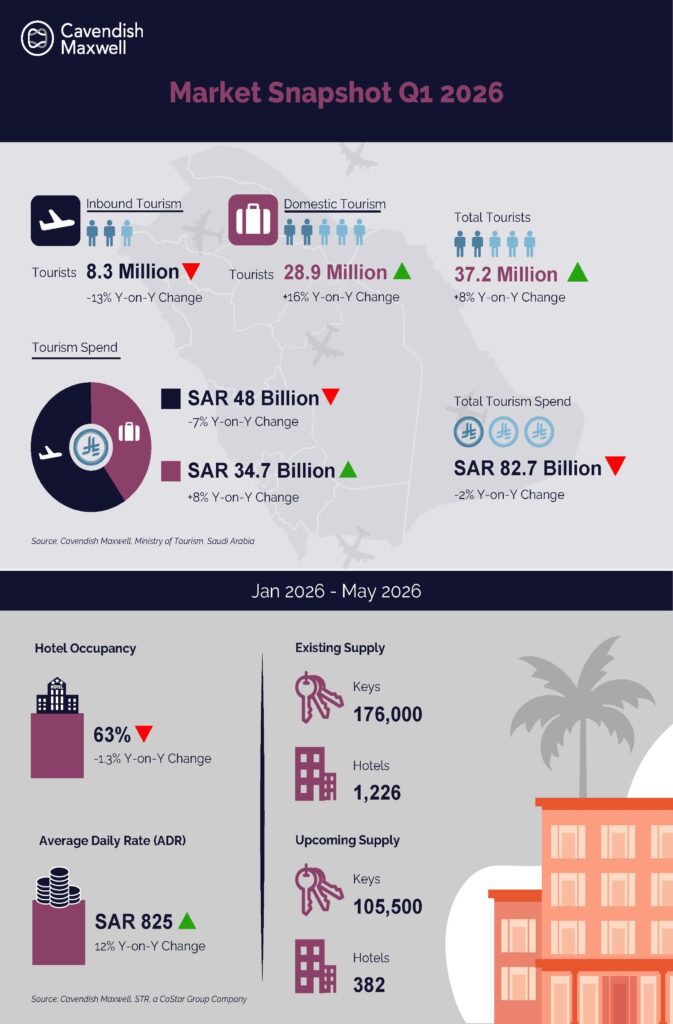
Inbound tourism activity moderated during the first quarter of 2026, with international visitor arrivals declining by 13% year-on-year to 8.3 million visitors and inbound tourism expenditure decreasing by 7% to SAR 48 billion. Despite the slowdown, international visitors remained the largest contributor to tourism spending, accounting for approximately 58% of total tourism expenditure. The decline was partly driven by heightened geopolitical tensions across the Middle East, which disrupted regional travel patterns, prompted flight suspensions by several international carriers, and contributed to greater caution amongst international travellers. Stronger domestic tourism activity, however, helped cushion the impact, with visitor volumes and expenditure continuing to grow through the quarter.
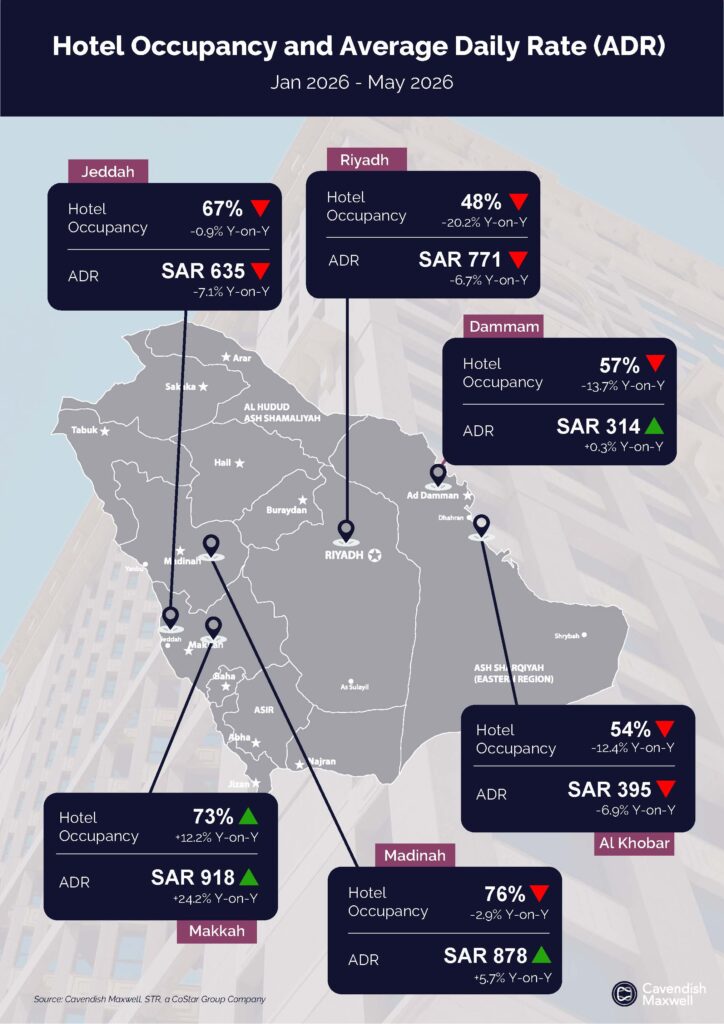
Against this backdrop, religious tourism continues to provide a strong foundation for the hospitality sector. Accounting for nearly 20% of all tourism activity and approximately 40% of international tourism, the segment remains a key demand driver for the Kingdom. Makkah and Madinah continue to outperform other destinations, with the impact of Hajj already evident in Makkah’s May performance through higher occupancy and ADR levels. The full benefit is expected to become more apparent in Madinah’s June results, while ongoing investments in pilgrimage infrastructure and capacity expansion should support long-term growth across both cities.
Overall, while geopolitical uncertainty and lower international travel demand may continue to influence market performance in the short term, the combination of growing domestic tourism, sustained pilgrimage activity, and continued investment in tourism infrastructure positions the sector well for recovery and longer-term development.